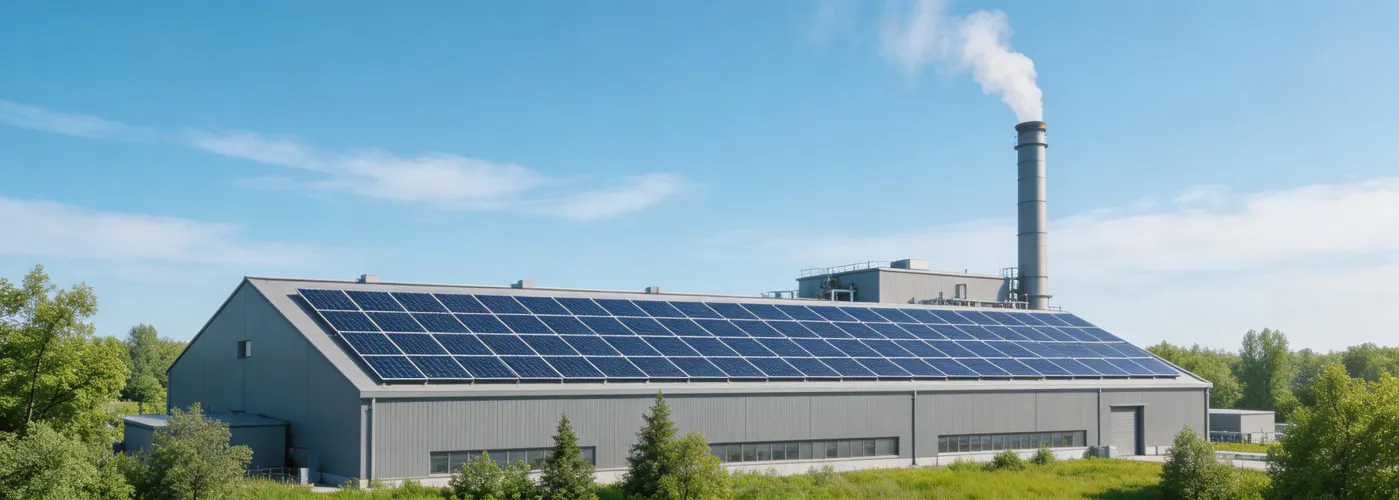
Burnham Boilers Sustainability Commitment
Engineering cleaner combustion, higher efficiency, and lower environmental impact at every stage of the boiler lifecycle.
Engineering cleaner combustion, higher efficiency, and lower environmental impact at every stage of the boiler lifecycle.
As a boiler manufacturer, we operate at the intersection of energy consumption and emissions. That position carries responsibility. Every product we design, every burner we tune, and every system we commission is evaluated against its environmental footprint. Our goal: help our clients reduce fuel consumption and emissions without compromising thermal performance.
Our latest burner generation achieves less than 9 ppm NOx on natural gas, meeting SCAQMD Rule 1146 and EPA Tier 4 limits. Pre-mixed surface combustion technology and staged air injection eliminate hot spots that produce nitrogen oxides.
Our condensing boiler line captures latent heat from water vapor in flue gases, pushing thermal efficiency to 98.5%. For a 6,000,000 BTU/hr installation running 6,000 hours annually, that translates to approximately $28,000 in annual fuel savings versus an 82% efficient conventional boiler.
Integrated economizer packages recover 4-7% of additional thermal energy from exhaust gases, preheating feedwater from 60F to 200F+. Stack temperatures drop from 450F to below 250F, reducing heat loss to atmosphere and lowering the carbon intensity per unit of steam produced.
Emissions regulations are tightening globally. Our product development roadmap anticipates these changes, ensuring our clients invest in equipment that meets tomorrow's standards today.
We actively engage with regulatory bodies including the EPA, SCAQMD, and CARB to understand pending regulations and design products that exceed compliance thresholds by comfortable margins.
All gas-fired products meet EPA Tier 4 and SCAQMD Rule 1146 NOx limits (< 9 ppm).
Ultra-low NOx burner line targeting < 5 ppm for California CARB compliance.
Hydrogen-ready burner designs capable of up to 20% H2 blend in natural gas supply.
30% reduction in fleet carbon intensity versus 2020 baseline across all installed units.
Choosing the right boiler fuel and combustion technology involves balancing emissions, cost, infrastructure readiness, and long-term regulatory risk. There is no single correct answer for every facility.
Natural gas remains the most widely adopted fuel for commercial and industrial boilers in North America due to its relatively low carbon intensity among fossil fuels, established supply infrastructure, and compatibility with high-efficiency condensing technology (up to 98.5% thermal efficiency). Gas burners produce lower particulate and SO2 emissions compared to oil.
Limitations: Natural gas is still a fossil fuel with a carbon footprint of approximately 117 lbs CO2 per MMBTU. Gas supply curtailments during peak demand periods (especially in cold climates) can disrupt heating operations. Pipeline infrastructure is unavailable in some rural and remote locations.
Hydrogen blending (up to 20% H2 by volume in natural gas) is emerging as a decarbonization pathway for existing boiler infrastructure, avoiding the capital cost of full electrification. Several utility pilot programs in the U.S. and Europe are testing blended supply.
Limitations: Green hydrogen production remains energy-intensive and expensive ($4-8/kg vs. $1-2/kg for grey hydrogen as of 2025). Higher H2 fractions above 20% require burner and gas train modifications. Full electrification via heat pumps offers higher source-to-heat efficiency (COP 3-4 vs. ~0.95 for combustion) but requires significant electrical infrastructure upgrades and may not suit high-temperature steam applications above 250F.
Fire-tube boilers (hot gases pass through tubes submerged in water) are the standard choice for capacities up to 800 HP. They offer lower initial cost, simpler operation, and faster response to load changes. Water-tube boilers (water flows inside tubes heated externally) are preferred above 800 HP and for higher pressures (>250 psig) due to faster steam generation, higher safety margins at elevated pressures, and better suitability for superheated steam.
Trade-off: Fire-tube boilers have larger water volume, which provides thermal mass for load swings but results in longer cold-start times (45-90 minutes vs. 15-30 minutes for water-tube). Water-tube boilers require more skilled operators and have higher maintenance costs due to tube sheet complexity.
Condensing boilers achieve 95-98.5% thermal efficiency by recovering latent heat from flue gas water vapor. Non-condensing boilers top out at 80-85% efficiency. For applications with return water temperatures below 130F, condensing technology delivers significant fuel savings.
Trade-off: Condensing boilers produce acidic condensate (pH 3-4) that requires neutralization before discharge, adding a maintenance item. They are most effective when return water temperature stays below 130F; in high-temperature process steam applications (steam at 150+ psig), the return temperature is too high for condensing to occur, eliminating the efficiency advantage. Non-condensing boilers remain more cost-effective for these high-temperature scenarios.
 ISO 14001
 ENERGY STAR
 EPA Compliant
 LEED Compatible
Our engineering team can assess your existing boiler plant and provide a detailed roadmap for reducing emissions, improving efficiency, and lowering fuel costs.
Request a Sustainability Assessment